
Loading...
Serving Beaumont, TX and surrounding areas. (409) 226-1232
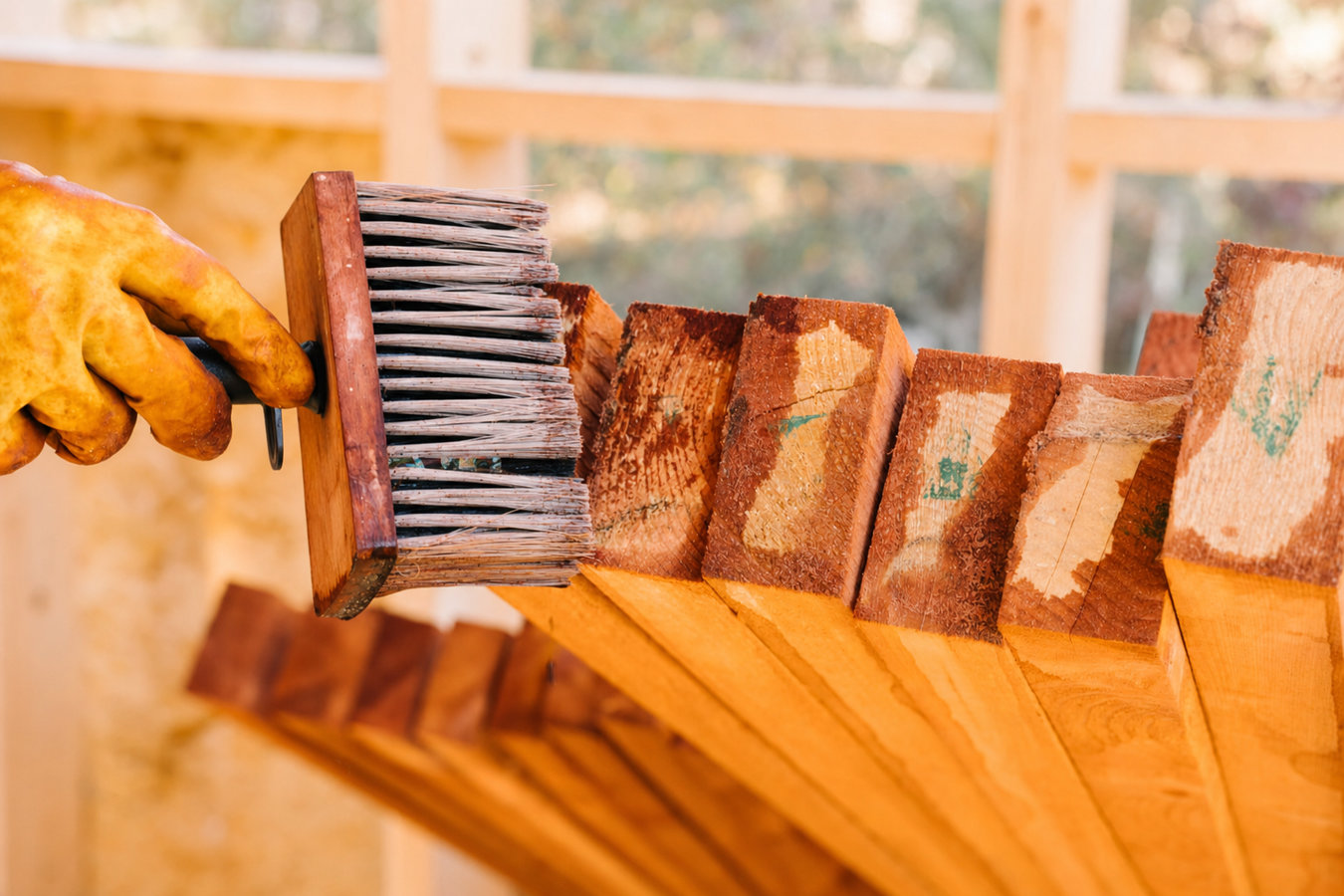
Beaumont's humidity, UV intensity, and heavy rain are hard on unprotected wood. We clean, prep, and seal your fence the right way so it holds up through the heat and storm season - not just for a few months.
Fence staining and sealing in Beaumont, TX soaks protective ingredients into the wood and adds a water-resistant barrier on the surface, slowing down the rot, warping, and graying that Southeast Texas climate causes - most standard privacy fences are cleaned and treated within one to two days once prep is complete.
In Beaumont, the gap between a sealed fence and an unsealed one is far more dramatic than in drier parts of Texas. Average relative humidity regularly tops 80 percent, annual rainfall runs around 55 to 60 inches, and the UV index hits very high levels through most of the year. Bare wood breaks down fast here. A fence that looked solid two summers ago can have soft boards at the base and cracking along the rails by the time you get around to checking it.
If your fence is showing more than surface wear - boards that are soft, posts that rock, or sections that are visibly leaning - a stain job may not be enough on its own. In that case, take a look at our fence replacement page to understand when a full rebuild makes more sense than surface treatment alone.
When wood loses its natural color and takes on a dull gray or silver tone, the surface layer has broken down from sun and moisture. In Beaumont, where UV intensity and humidity are both high, this color change can happen within a year or two on an unprotected fence. It does not mean the fence is ruined - it means now is a good time to act before the damage goes deeper into the wood.
A properly sealed fence causes water droplets to bead up and roll off. If you pour a small cup of water on your fence and it soaks straight in, the sealer has worn off and the wood is absorbing moisture directly. In Beaumont's rainy climate, an unsealed fence that takes on water like a sponge is on a fast track to warping and mold growth.
Dark streaks, green patches, or fuzzy growth on your fence boards are signs of mold and mildew taking hold. This is extremely common in Beaumont's humid environment, especially on the shaded side of a fence where moisture lingers. Left alone, mold works its way deeper into the wood fibers and becomes harder and more expensive to remove - catching it early keeps the prep and staining process straightforward.
Small cracks running along the length of a board are a sign the wood is drying out unevenly and losing its flexibility. This happens when the surface dries faster than the interior, often accelerated by Beaumont's intense summer sun. Staining and sealing slows this process down significantly; boards that are already cracking will continue to worsen if left untreated.
We offer semi-transparent stains for homeowners who want wood grain to remain visible while gaining UV and moisture protection, and solid-color stains for older or more weathered fences where a more uniform finish covers surface imperfections. For fences where preserving the exact natural tone is the priority, a clear water-repellent sealer keeps the wood looking as it is while blocking moisture from entering. On older or more porous fences, an oil-based penetrating stain soaks deeper into the wood fibers and tends to hold up better than a surface-coat product in Beaumont's damp conditions. If your fence is wood and you are also considering whether it needs structural attention, pairing this service with a look at wood fence installation gives you context on when replacement or new installation makes more sense than surface treatment.
Every job starts with a pressure wash and a drying period before any product goes on. We cover your plants, grass, and concrete with drop cloths before we spray. The bottom edge of every board gets full coverage, because that is the section that sits closest to standing water after Beaumont's heavy rain events and is the first place rot shows up if it is left unprotected.
Suits homeowners with newer fences who want natural wood grain visible while adding UV protection and moisture resistance.
Suits older or more weathered fences where the wood has already started to gray or show surface damage and a more uniform finish is preferred.
Suits fences where the wood tone and grain are to be preserved exactly as-is, with the focus on blocking moisture rather than adding color.
Suits older or more porous wood that benefits from a product that soaks deep into the fibers rather than coating the surface.
Beaumont sits in one of the most humid regions in the continental United States. Summer relative humidity regularly exceeds 80 percent, and the combination of moisture and Beaumont's intense UV levels breaks down unprotected wood much faster than in Dallas, Austin, or San Antonio. The U.S. Forest Service Forest Products Laboratory documents that UV light degrades lignin - the natural binder that holds wood fibers together - causing surface graying and brittleness. In Beaumont, that process runs faster than the national average because the UV index regularly hits the "very high" range during summer months. Hurricane season also creates a narrow, high-demand scheduling window: most homeowners want fence work done before the season peaks in June, which means spring slots fill fast.
Homeowners in established neighborhoods in Beaumont and nearby Port Arthur deal with older wood that has been through many cycles of Gulf Coast heat and rain. That wood is more porous and tends to absorb moisture - and stain - differently than newer lumber. The University of Tennessee Extension notes that properly prepared and finished wood fences in high-humidity climates require more frequent maintenance than the product label typically suggests. That is consistent with what we see on the ground here - a two-to-three-year check cycle is realistic for most Beaumont fences.
When you reach out, we will ask a few basic questions - fence length, material, when it was last treated, and whether there are obvious problem areas. Most projects get a written estimate within one business day of your call, and we can often give you a rough range over the phone before the site visit.
We walk the full fence line and look at the condition of the wood, posts, and base boards. We note any mold, cracking, and how much prep will be needed before product goes on. This is also your chance to ask questions about product choices and what to expect from the finished job.
Before any stain or sealer is applied, we pressure-wash the entire fence to remove dirt, mold, and old flaking product. In Beaumont's humidity, that typically means letting the wood dry at least 24 to 48 hours - sometimes longer. Rushing this step is the most common reason stain jobs fail early, and we do not cut that corner.
On application day, we protect your plants, grass, and concrete with drop cloths before starting. Product is applied by sprayer for even coverage, with brushes used on edges and tight spots. Most standard privacy fences are completed in a single day once the wood is dry. The fence needs 48 to 72 hours to cure before rain exposure.
Free written estimate. No obligation. We reply within one business day.
(409) 226-1232The most common reason a stain job fails early is that the contractor skipped proper prep - wet wood, mold that was painted over, or old product that was not removed. We pressure-wash and dry before we open a single can. That discipline is what makes the finish last in Beaumont's climate.
We choose stains and sealers with UV-blocking properties appropriate for Southeast Texas sun and formulas that handle high humidity during curing. A product that works well in Dallas may not hold up the same way here - we stock and recommend what we know performs in this region.
After heavy rain, water sits on the ground in many Beaumont yards for hours. The bottom edge of every fence board is the most vulnerable spot. We seal the full board - including the base - because leaving the bottom unprotected means rot starts where you cannot easily see it.
Before we leave, we document what was applied and give you a realistic timeline for the next treatment. In Beaumont's climate, most fences should be checked again in two to three years. Having that in writing means you are not guessing later whether the last contractor used the right product or how long it should last.
Fence staining in Beaumont is not a job where the prep matters less than the product. The two go together. We take the time on both ends - thorough cleaning before application and a clear record of what was done when we finish - so you get a fence that actually holds up, not just one that looks good on day one.
When staining is no longer enough - full teardown and rebuild with posts set correctly in Beaumont clay soil.
Learn MoreNew wood fence installation in Beaumont using pressure-treated lumber suited to the Gulf Coast climate.
Learn MoreCall or submit a free estimate request today and lock in your date before the pre-hurricane-season rush hits.